Image Credit:
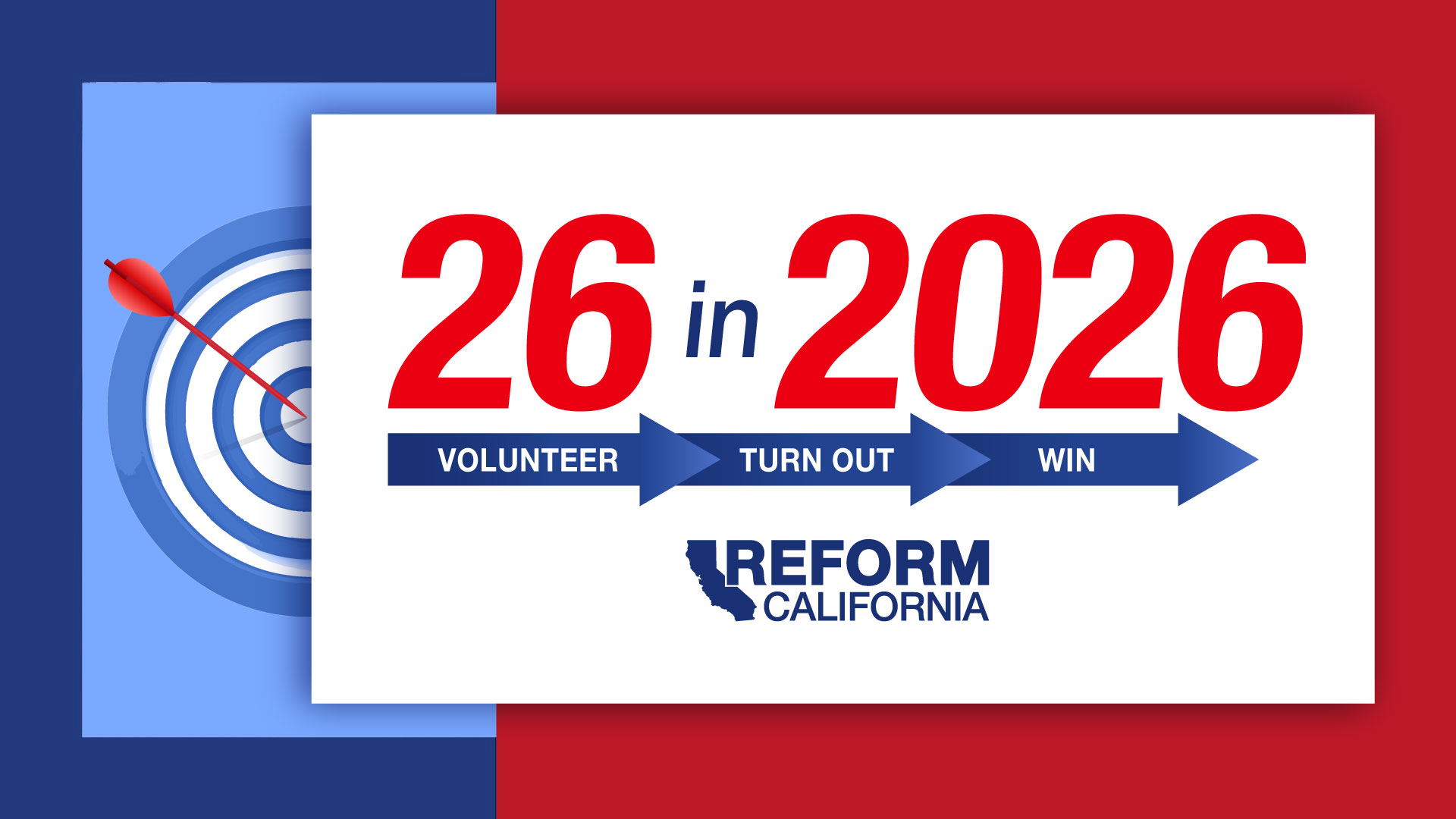
Reform California Chairman and State Assemblymember Carl DeMaio announced today the launch of “26 in 2026,” an aggressive, grassroots voter-turnout campaign designed to win 26 targeted legislative seats and help pass the California Voter ID Initiative in the 2026 midterm election.
“For too long, Republicans in California have played defense and relied on expensive, ineffective tactics,” DeMaio said. “We’re done lighting money on fire with TV ads that voters ignore. If we want to win in California, we have to out-organize, out-work, and out-turnout the Left.”
Research on political campaigns overwhelmingly shows that personal contact with a voter is up to ten times more effective than television ads or mass mailers when it comes to getting ballots returned and persuading voters.
“That’s not theory — that’s reality,” DeMaio said. “A conversation at the door beats a glossy mailer every single time. California elections are won by turnout, and turnout is driven by personal contact.”
That reality is the foundation of the “26 in 2026” campaign — a program built around handwritten letters, door-to-door conversations, neighborhood events, and easy-to-use voter guides.
Turnout in California midterm elections collapses compared to presidential years — falling from roughly seventy-eight percent in 2024 to just thirty-five to forty-five percent in midterms, depending on the region.
“That drop-off is the whole ballgame,” DeMaio said. “Whoever motivates their voters wins — and Republicans lose when our voters stay home. ‘26 in 2026’ is how we fix that.”
The campaign’s goal is to turn out seven hundred thousand low-propensity conservative voters statewide — voters who would not normally participate in a midterm election — and to concentrate that turnout in twenty-six target districts.
“If we add fifteen to twenty-five thousand votes in each of these seats, we flip the map,” DeMaio said. “It’s math, not magic.”
Reform California is recruiting twenty-six thousand volunteers statewide to personally engage low-propensity voters in targeted districts using lists provided by the organization.
Volunteers commit to completing twenty-six real, face-to-face conversations with voters — not just dropping literature and walking away.
“This program only works if we actually talk to voters,” DeMaio said. “Door hangers are fine, but conversations are what count. We’re asking people to make a real commitment — because winning requires effort.”
Volunteers are also needed to host or help fill Reform California’s “Barbecue, Beer & Ballots” events in October 2026 — community-based events that make voting easy, social, and secure while distributing Reform California’s endorsed voter guide.
“This is our version of ballot harvesting — legal, transparent, and effective,” DeMaio said. “We make voting convenient, we give voters the information they need, and we make sure ballots actually get turned in.”
Each volunteer commits to hosting an event or delivering twenty-six attendees to a public event.
Executing a statewide turnout operation requires resources — and early support matters most.
“Early money is force-multiplying money,” DeMaio said. “It allows us to hit fundraising milestones that unlock matching funds and expand this program faster. If you want results in 2026, the time to invest is now.”
The “26 in 2026” campaign reflects a simple reality: California can be won — but only if Republicans are willing to do the work.
DeMaio said the stakes in 2026 could not be higher — for the Legislature, for election integrity, and for the future direction of California.
“The Left wins in California because they organize year-round and turn out their voters,” DeMaio said. “If we match that effort — and focus it where it matters — we win seats, we win reforms, and we pass Voter ID.”
He closed with a direct challenge to supporters across the state.
“Everyone can do something,” DeMaio said. “Drive to a target district. Talk to your neighbors. Host an event. Donate early. But do something.”
“This is how we take California back — one voter, one neighborhood, and one district at a time.”



.png)
